
Affordable housing in Marionville raises questions about getting around
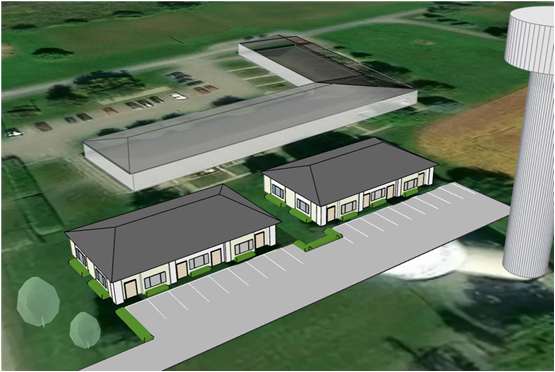
A proposal to build affordable housing in Marionville is raising concerns about how residents would get to groceries, medical appointments and other services.
Two housing specialists say transportation matters as much as the homes themselves because without a car or help getting around residents could struggle to reach groceries, medical appointments and other services.
Russell Township is exploring the possibility of building affordable housing on township owned land near the Marionville water tower. The Ottawa based nonprofit housing developer CAHDCO presented two early options at the October 13 council meeting for eight accessible single storey homes or 16 units in two storey stacked townhouses. Council has agreed to investigate the site further and has not approved construction or committed funding or land to the project.

Jennifer Lambert, housing plan coordinator for the United Counties of Prescott and Russell, said affordable housing is needed throughout the region but she agreed that transportation and access to services are important questions in Marionville.
“It would have to be either people with a car or a lot of family members that are really involved or some type of services from the community where they could support transportation or going out,” she said. Whether the location works would depend in part on who would live there and what help they have getting around.
Mollie Kuchma, an assistant professor of rural planning and development at the University of Guelph, said council’s concerns about services and transportation are valid.
“People aren't going to remain successfully housed if all of the other pieces don't fall into place as well,” she said.
Kuchma said affordable housing is needed but people also need to be able to reach schools, medical care, stores and other services. Some seniors may no longer be able to drive or feel comfortable driving, she said.
“So putting them further away from these services without any transit is not a suitable location for them.”
A question about the location
Mike Tarnowski said this week that “several important factors” would need to be considered before placing any such housing in Marionville. This would include community services, access to employment, health care, and transportation.
“I believe transportation considerations should form part of any discussion regarding future housing opportunities in Marionville. The Township's transit feasibility study is intended to examine transportation needs across the entire community, and I would expect Marionville's needs to be considered as part of that broader review,” he said.
“At this stage, it would be premature to suggest a specific service model. The purpose of the study is to assess demand, costs, and potential service options before any decisions are made. Ultimately, the most appropriate solution, if any, should be guided by the study's findings.”
Coun. Charles Armstrong said he spoke to the proponents after their presentation and said they based their initial proposals on the amount of government owned land available and did not consider the lack of sewage facilities in Marionville.
“I am not convinced, or unconvinced, that such a proposal is suitable for Marionville. It was proposed next to an assisted living facility that exists in the village, with even more units than the proponents presentation, but that facility has a large, engineered, private septic system. I need much more information to decide what is best here.”
Councillor-elect Dominique Bertrand said she understood the proposal would likely serve people with vehicles, perhaps retirees but the lack of a nearby grocery store would make it difficult for residents without a vehicle and she does not consider Marionville an ideal location for affordable housing for people who rely on public transportation.
“If we were to explore a transit system, I believe we would need to consider serving the entire Township, although not necessarily on the same schedule or with the same frequency in every community.”
Coun. Lisa Deacon pointed out that subsidized seniors’ housing already exists at Villa d’Accueil Sainte-Thérèse de Marionville without municipal transit on the Russell Township side. She said she believed there was no transit access from the Ottawa side either.
“So, housing for lower-income individuals without access to transit is not unheard of, though we know from Tim Welch's report that affordable housing and transit support one another for connection, opportunity, and well-being,” she wrote.
Welch heads the consulting firm that prepared the township’s 2024 Affordable Housing Action Plan.
CAHDCO’s Adrian Schut said the location might not work well for people who need deeply subsidized housing and have difficulty finding transportation but it could be an option for people with modest incomes who have vehicles including some seniors living on fixed incomes.
A township staff report said the vacant Marionville property could be examined immediately. Other possible sites near the Russell arena are tied to a separate review of township properties. Staff also suggested a small project could be a way for the township and CAHDCO to begin working together.
In an October 30 interview, Tarnowski said the township faces a shortage of available land it can offer for affordable housing.
“The biggest challenge we have here in Russell Township is we don't have excess land that's available where we can say, hey, look, we're looking to partner with a builder to build some affordable housing.”
Coun. Jamie Laurin questioned why council was being asked to move ahead with one site before seeing what other township properties might be suitable. Staff said they needed to find out whether there was demand in Marionville, how a project could be financed and who might operate it. Staff suggested they could return to council in three to six months with answers to those questions.
Transit options
The township is looking into local transit options after awarding a contract for a feasibility study in May 2026 with a report expected at council in December.
In a September email, Jonathan Bourgon, Russell Township’s executive director of planning and infrastructure services, said the study was focused mainly on connections between Embrun, Russell and the 417 Industrial Park. Different ways of providing the service were being considered.
The need for housing
Lambert said the counties’ September figures recorded five households experiencing homelessness in Russell Township for a total of 12 people. All were staying temporarily with other people. The figures count households known to the counties’ homelessness team so they do not necessarily include everyone without a stable home.
Across Prescott-Russell, 1,330 households were on the social housing waiting list. She also said there were 70 active applications for the seniors’ one bedroom units.
The average monthly rent for surveyed apartments and row houses in Russell Township was $2,379 in October 2025, according to the Canada Mortgage and Housing Corporation. The figure covers all bedroom sizes and does not include social or affordable housing.
“Russell has a plan for housing and there's other municipalities that don't have a specific plan for affordable housing,” Lambert said. “It doesn't mean they're not doing anything.”
Russell’s Affordable Housing Action Plan was prepared in 2024 and recommends considering township land for affordable housing, working with developers and improving transportation options. A housing needs assessment that accompanied it identified a shortage of smaller homes and limited non-market housing. Non-market housing is provided outside the usual for-profit housing market, often by a government or nonprofit organization. Rents may be geared to income or kept below market rates.
The township’s Official Plan also sets a target that 30 per cent of new residential units be affordable. It says the township may require developers to provide affordable units to help meet that target.
Kuchma said clear planning policies give municipalities a way to push for the kind of housing they want when developers have different ideas.
Lambert said people with lower incomes should have options that allow them to stay in their own communities but some feel they have to leave because they can no longer keep up with rent and other costs.
“We want to make sure that there's options for everyone on the housing continuum in every municipality,” she said.