
A little play, a little company and a helping hand in Embrun
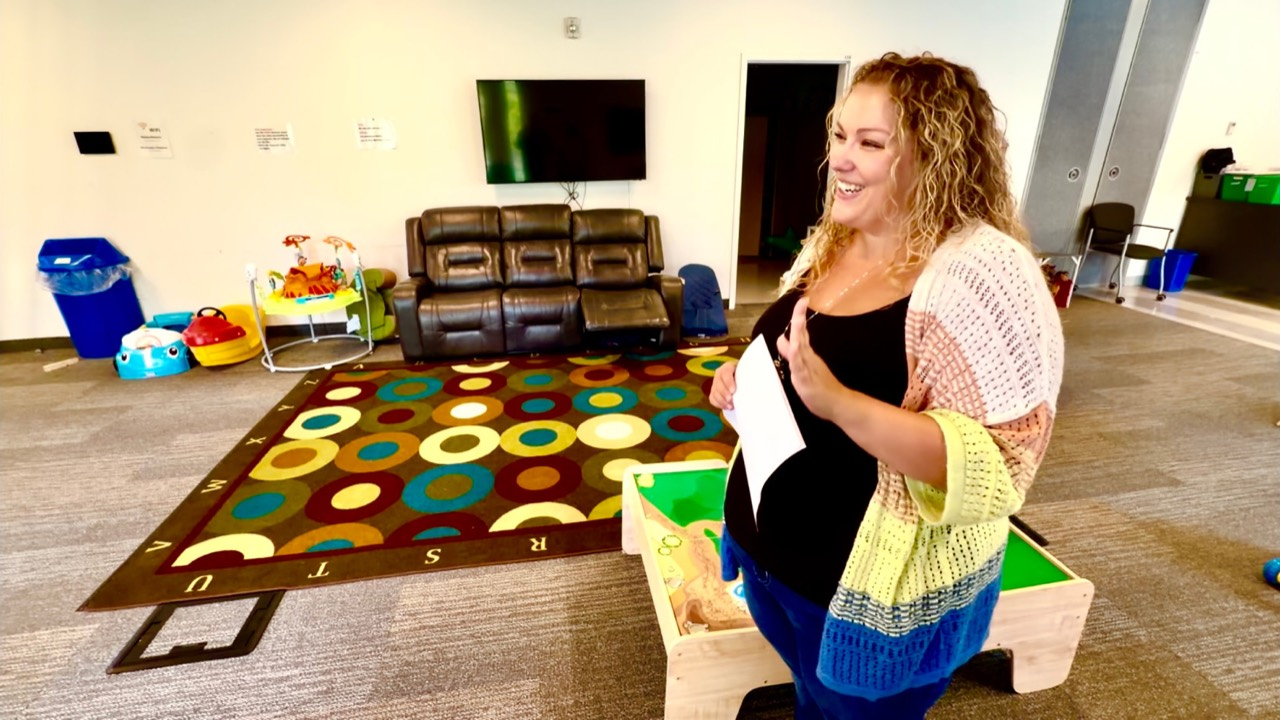
Sometimes the toys at home have simply lost their appeal. A child needs a change of scenery and a parent could use a little company.
That is reason enough to visit the Embrun Family Centre, says Stéphanie Piché, Groupe Action’s early childhood supervisor. Families do not have to arrive with a problem to solve. They can come to play or meet someone new and enjoy a morning together. If a question about their child does come up there is someone to ask.
“All the educators at the family centres have different skill sets, and we’re all professionals that can help with the children’s development and children’s behaviour. Everything is free. So we are a resource centre. So if ever a family comes in with any questions, we try to navigate through and get them the help and the answers that they want,” Piché says.
Piché supervises Groupe Action’s three family centres in Embrun, Hawkesbury and Rockland. Their work centres on families with children from birth to age six bringing together play, practical support and help finding other services in the community.
Groupe Action is a Hawkesbury-based nonprofit whose roots go back to a parents’ association established in 1982. It took the Groupe Action name in 1990 and its family centres have been operating for more than 30 years. The organization also provides a separate home-care service. Its financial partners include the Public Health Agency of Canada, Ontario Health, United Way, Ontario Health atHome and the Fondation franco-ontarienne.
At Embrun, that begins with a playroom where parents, grandparents and children can settle in together. During a video tour Piché pointed out tables and chairs in different sizes, a place for snacks and activities, and cubbies where families can leave coats and diaper bags before joining in.
The activities may look simple, but there is thought behind them. Playing with blocks offers opportunities to count and practise coordination. Sorting shapes and colours introduces early mathematical ideas. The registered early childhood educators help parents see the learning taking place while their children play.
“So each activity is based on a different theme. So let’s say if we’re exploring numbers, numeracy, well, it’s all activities with shapes, colours, classification, all those little skill sets they can find in numeracy. So all our activities that we present helps to give an idea of, to the parents, of what to do at home. So our activities are more of a low budget-low items needed to recreate at home.”
For adults those mornings offer a chance to get out of the house and talk with someone who understands life with a young child. Piché sees mothers and fathers on parental leave, grandparents caring for grandchildren and families whose children are not in daycare.
“Parents come here. We have fathers, mothers, grandparents, so everyone’s welcome. And when they have babies, it’s more for socialization, so parents get out of the house. They can meet some other parents with other experiences, share experiences, and make connections.”
For children who are not in daycare the playgroups offer experience socializing with other children before they enter a classroom of 25 to 30 pupils, Piché explains. Families can help their children get accustomed to being part of a group while making connections themselves.
Others appreciate the company and the familiar surroundings. Newcomers may need help finding local schools, childcare or community agencies, and staff can help them work out where to turn.
Services are bilingual with some activities tailored to younger children.
“We do have some activities more for babies, so 24 months and under, because they don’t have the same level of development. So we want to really focus on their age group as well.”
Piché says regular programming is free although a small charge may apply to some special activities or outings to help cover costs.
“We want to make the families all equal. Does it matter the budget that you have? Everything is accessible so that’s our main goal.”
There is also practical help for parents with questions about how their child is growing. Through the Eastern Ontario Health Unit’s Watch Me Grow program a public health nurse visits the centre. Parents can have their babies weighed and measured and ask questions with the playroom close at hand rather than a separate waiting room.
When a parent is concerned about development the centre can help with the Ages and Stages Questionnaires, a screening tool completed with families. Piché explains that it can point to skills that need more practice or monitoring or indicate when a referral may be appropriate. The aim is to help parents understand the next step and connect them with the right support.
“We would talk to the parent and then see what best avenue to guide them,” she says.
Getting ready for school is another part of the centre’s work. Its Munchkin program gives children aged three and four time with educators without their parents, practising everyday skills that can make the move into a classroom a little easier.
“So it’s for three- and four-year-olds that are starting school next year. So they come two hours alone without the parents, with the educators, and we practice different social skills that they might need for a good start at school. So we practice waiting their turn, sharing, taking a line, listening to another adult. We practice opening their lunchbox, snacks. So all those little things that might not be acquired before, we practice that.”
Children also practise recognizing their feelings and calming themselves alongside the routines of being part of a group. The program gives priority to children who are not in daycare, Piché says.
The centre’s support can extend to household essentials. Through 1-2-3 Blooming Baby low-income families with children from birth to age two can receive help with diapers, formula and wipes each month. The program serves families across Prescott-Russell and has a limited number of places. At the time of the interview, Piché said there was no waiting list.
The snowsuit fund also serves low-income families throughout Prescott-Russell, providing free, brand-new snowsuits for children from birth to age 12. Families can ask staff about eligibility and availability.
Donations and grants help make the centre’s work possible. Piché says its toys are donated while grants have helped pay for new furniture. Public Health Agency of Canada funding covers basic needs and a United Way grant supports the healthy snacks offered each morning during playgroup, she says.
There is plenty of interest in what the centre offers. Piché says its Halloween activity filled within two days of registration opening, prompting staff to add another session. The Embrun space can accommodate about 30 to 35 people at a time, including adults and children.
Families return week after week, and some come every day, she says. For one parent, a visit might mean finding an answer to a worry. For another, it may simply mean a child enjoying different toys while the adults have someone to talk to. Both are part of what the centre is there to offer.
The Embrun Family Centre is at 8 Valoris St. For current programming and registration information, contact 613-443-1614 or maisonembrun@groupeaction.ca, or visit Groupe Action’s family-centre page.