
Smudging ceremony honours Indigenous veterans at Russell cenotaph
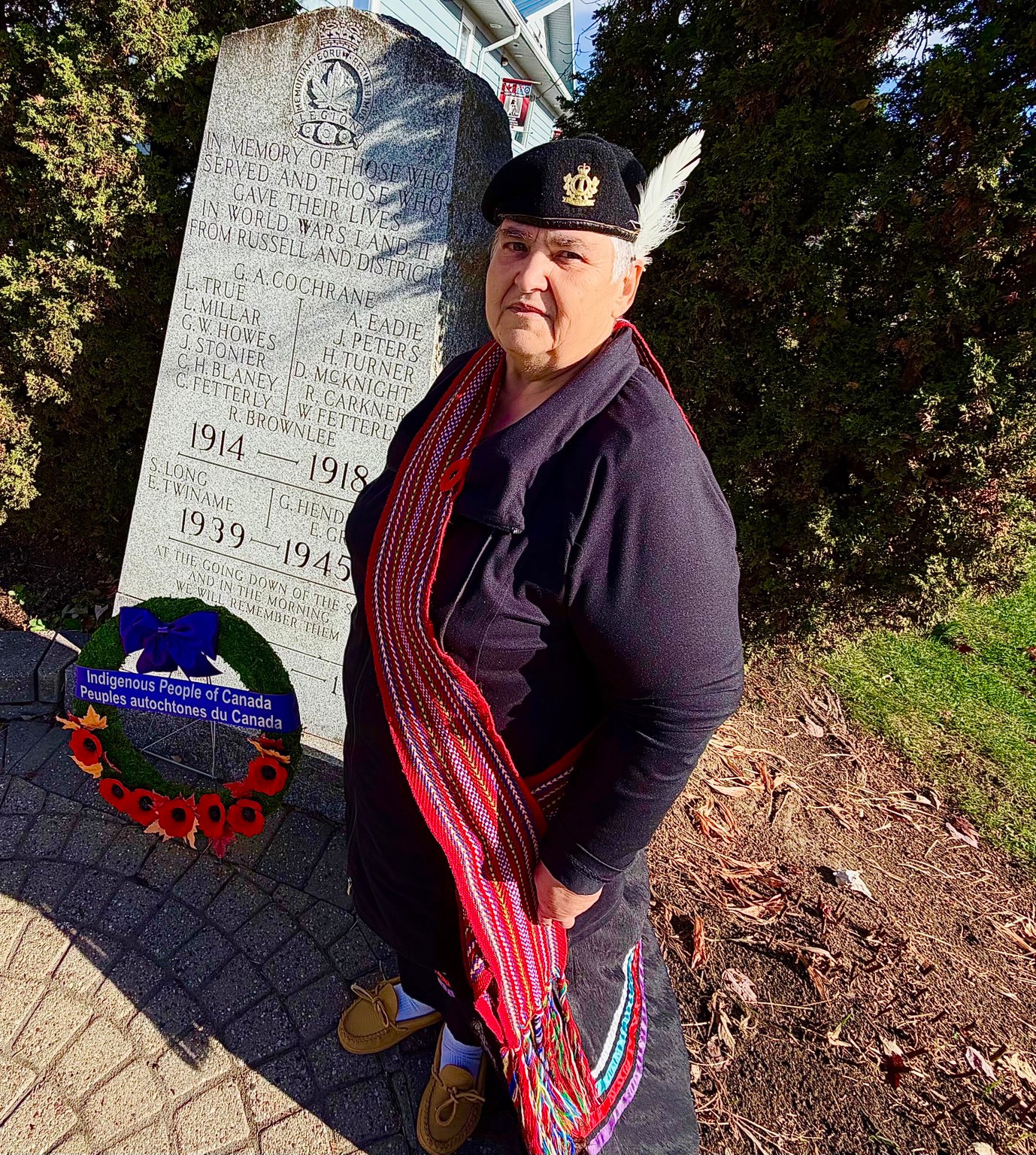
For Christine Durocher the ancient smudging ceremony helped create “perfect harmony with the Creator” as two dozen gathered at the Russell cenotaph in a spirit of reconciliation to honour veterans who have gone to the “skyworld.”
For Durocher, a Métis resident of Russell and former reservist, the solemn smudging was a way to prepare the space for remembrance.
“It’s to cleanse the area and keep it clear and pure,” she said.
After smudging the cenotaph Durocher sang a song in remembrance of people who had died. She said the ceremony was a way to acknowledge their service and sacrifice.
“Those ceremonies are sacred because we are respecting and acknowledging what people have done or what people are doing,” she said.
Durocher described it as a time to bring feelings of love, sorrow and appreciation to the Creator. In the traditions she described, the eagle carries those messages because it flies high into the sky.
Afterward, people gathered for coffee and Durocher served two pies she had prepared for the event.
She has been conducting the Russell ceremony for three years and also took part in a ceremony in Vars on Sunday, where she had been invited to give a land acknowledgement and include Indigenous remembrance in the service.
Durocher said remembering Indigenous veterans also means acknowledging the difficulties they faced when they returned home from war.
Veterans Affairs Canada acknowledges that many Indigenous veterans did not receive equal treatment after their service. It describes barriers that prevented some First Nations veterans from receiving pensions, grants and other benefits, as well as difficulties accessing government programs.
For Durocher, recognizing Indigenous veterans through ceremonies such as Sunday’s is part of reconciliation.
Her own connection to military service dates to the 1970s. She said she served with the Régiment de Hull in the reserve forces from 1975 to 1977 and has been a Legion member for 20 years. She moved to Russell about three years ago because she was already involved in several Legion roles and wanted to avoid travelling to and from those commitments on winter nights.
Durocher said she knew her maternal great grandmother was Métis and arranged genealogical research to learn more about her family’s history.
She provided family documents to a researcher who had worked on Indigenous genealogy, tracing both sides of her family to the same Indigenous ancestor. That exploration of her heritage is part of her life today, including her participation in the By the Water Drumming Circle of Rockland. The group meets once a month and she practises the songs between gatherings.
The song she chose for Sunday’s ceremony was intended to remember people who died in earlier years. She explained that a recent death would call for a different song and asked to be notified before next year’s ceremony if any veterans had passed away in the intervening time. She would then sing a different song, a travelling song, to help the person’s spirit on its journey.
She said some songs are being shared online giving younger people another way to connect with their roots. Others remain closely tied to particular ceremonies.
This year’s gathering was considerably larger than the first one she conducted.
“The first year there was me and the sergeant at arms,” she said.
Only a few people came the following year and she credits better publicity for bringing out a much larger group on Sunday.